Family Communication & Decisions
How to Hold a Family Meeting About Aging Parents (with Agenda Template)
Care Canary Editorial Team ·
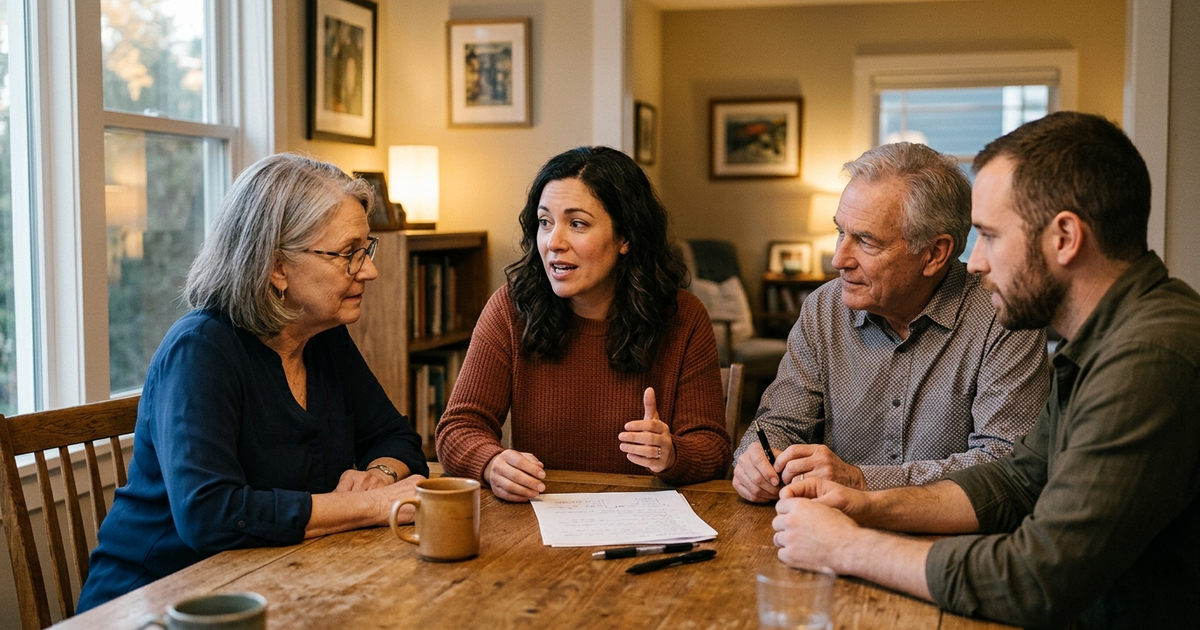
A family meeting is the single most useful tool for getting siblings onto the same page about a parent's care — and most families run it badly or not at all. With a clear family meeting agenda for aging parents, ground rules, and a way to record decisions, one hour can accomplish what months of scattered phone calls never will.
The meeting is one piece of a bigger system. If you haven't already, start with our communication playbook for siblings facing a parent's care — it covers what happens before and after the meeting, too.
Who should be there
Keep the first meeting to the core decision-makers: siblings, your parent (whenever they're able and willing), and possibly your parent's spouse. Spouses of siblings and grandchildren can join later meetings, but every extra voice in round one multiplies the opinions without adding authority.
Video counts as being there. Don't let geography exclude a sibling — a far-away brother who misses the meeting will question the decisions made without him.
Pick the right time and setting
Timing shapes tone. Avoid holiday gatherings — the emotional load is already high, and grievances come pre-packed. A separate, purpose-scheduled hour on a calm weekend works far better.
Choose neutral, comfortable ground: a sibling's kitchen table, a quiet video call, or your parent's living room if they're hosting the conversation about their own care. Turn off the TV, put phones away, and set an end time. A meeting with a defined stop is easier to say yes to — and easier to keep civil — than an open-ended summit.
Set ground rules before the first agenda item
Two minutes of ground rules prevent two hours of argument. Read them aloud at the start:
- One person speaks at a time. No interrupting, even to agree.
- Stay in the present. No relitigating childhood or past caregiving grievances.
- Criticize ideas, not people. "That schedule won't work" is fine. "You're always selfish" is not.
- Anyone can call a pause. Ten minutes of air beats a blowup.
If your family runs hot, it's worth reading the full set of ground rules that keep care conversations from blowing up before you gather.
The agenda template
Send this out at least three days ahead so nobody is ambushed. Adapt freely:
- Current picture (10 min). The sibling closest to the situation summarizes: health, daily struggles, what the doctor said. Facts only, no proposals yet.
- Parent's wishes (10 min). What does Mom or Dad want? If they're present, they lead this section. Their preferences anchor everything else.
- What needs to happen (10 min). List the concrete needs — rides to appointments, help with bills, someone checking in daily. Write them where everyone can see.
- Who can do what (15 min). Match needs to people honestly, accounting for distance, jobs, and health. For a deeper method, see our guide to dividing elder care duties by each sibling's strengths.
- Money (10 min). What does the current plan cost, who pays what, and what's the trigger for revisiting it.
- Decisions and action items (10 min). Restate every decision and every task with a name and a date attached.
- Next meeting (2 min). Put it on the calendar before anyone leaves.
Keep a decision log
Memory is the enemy of family harmony. After every meeting, one person posts a short written summary to a shared place — a group email, shared note, or family thread: decisions made, tasks assigned, open questions.
This isn't bureaucracy. Six months from now, "we agreed in March that Dan handles the pharmacy" ends an argument in one sentence.
Turn action items into a schedule
Decisions about who-does-what only survive if they land on a calendar. A shared caregiving calendar the whole family can see turns "Lisa covers appointments" into actual dates, and makes gaps visible before they become emergencies.
Don't let it be a one-time event
The first meeting is the hardest; the follow-ups are the most valuable. A standing 30-minute check-in — monthly, or quarterly if things are stable — keeps the plan current as your parent's needs change.
Between meetings, a light-touch routine keeps everyone informed without another call. A simple update cadence for keeping the family in the loop — one short weekly digest from the point person — covers most of it.
If the meeting goes sideways
Sometimes a meeting surfaces disagreement it can't resolve. That's not failure; it's information. Name the disagreement, write it in the log as an open question, and agree on a next step — more information from the doctor, a second meeting, or a neutral professional to assess the situation.
What you shouldn't do is force a vote that half the family will resent, or let one loud voice decide by exhaustion.
The bottom line
Send an agenda ahead of time, open with ground rules, give your parent's wishes their own agenda item, and end with named tasks, dates, and a written decision log. Then book the next meeting before you leave the room. One structured hour, repeated on a rhythm, is how families stay a team.
Related guides
- Talking About a Parent's Care: A Communication Playbook for Siblings
- How to Talk to Your Parent About Giving Up Driving
- A Sustainable Update Cadence: Keeping Siblings Informed Without Burning Out
- When to Hire a Geriatric Care Manager (and What One Costs)
- What to Do When Siblings Disagree About a Parent's Care
- Creating a Shared Caregiving Calendar Siblings Will Actually Use