Coordinating In-Home Care
Managing an In-Home Caregiver From Another City
Care Canary Editorial Team ·
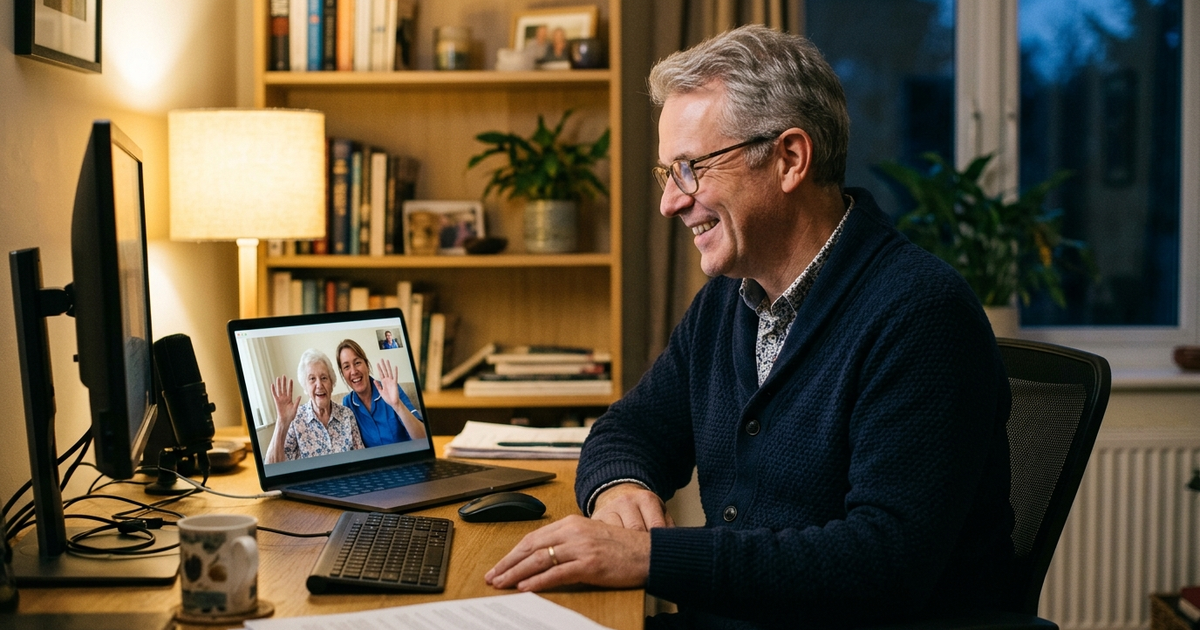
Managing caregivers remotely sounds precarious — you're responsible for your parent's daily care from two states away, relying on people you can't observe. But thousands of families run excellent long-distance arrangements. The difference between the ones that work and the ones that unravel isn't proximity. It's systems.
Here's how to build them: hiring with distance in mind, communication routines that surface problems early, respectful monitoring, and a local safety net. This assumes care is already in place; if you're still setting it up, start with the full family guide to arranging in-home care for an aging parent.
Hire for distance from the start
Remote management raises the stakes on hiring. Two implications:
- Agencies earn their premium at a distance. Backup coverage when a caregiver calls in sick, supervision, and a manager you can call are worth far more when you can't drive over to fill gaps yourself.
- Screen for communication, not just caregiving. A wonderful caregiver who never texts updates is a poor fit for a remote family. Make proactive communication an explicit interview criterion — our caregiver interview and screening checklist includes questions that reveal it.
Whoever you hire, set the expectation in writing: what gets reported, to whom, how fast.
Build a check-in routine with three layers
Ad hoc phone calls miss slow declines. Layer your contact:
- Daily lightweight signal. A short text or app note from the caregiver after each shift — mood, meals, meds, anything unusual. Two minutes for them, enormous peace of mind for you.
- Weekly structured call. Fifteen minutes with the caregiver (or agency care manager) against a standing agenda: health changes, supplies, upcoming appointments, concerns. Same day, same time.
- Regular video calls with your parent. Not about logistics — about connection. You'll also see things a report won't tell you: weight change, grooming, how they move.
Log the highlights somewhere the whole family can see. A shared note or care app prevents the "nobody told me" spiral — and if several siblings want updates, a defined family update cadence keeps you from becoming the full-time switchboard.
One more habit worth building: track small data points over time. Weight, appetite, sleep, and mood notes from daily check-ins reveal slow declines that no single report would flag. When you spot a drift — three weeks of "ate very little" — you can raise it with the doctor early instead of discovering it at the next crisis.
Cameras and monitoring: useful, with consent
Remote monitoring technology has matured, but the rules matter as much as the gear.
- Get your parent's consent first. If your parent has capacity, monitoring without their knowledge is a violation of their dignity — and depending on the state, recording (especially audio) without consent can carry legal risk. Have the conversation, explain the purpose, and let them set limits.
- Tell the caregiver cameras exist. Hidden surveillance destroys trust with good caregivers and may violate agency policy or state law. Disclosed cameras protect everyone, including the caregiver.
- Never put cameras in bathrooms or dressing areas.
- Start with less invasive options. Motion sensors, smart door sensors, and medication dispensers that report missed doses often answer the real question — "is the routine happening?" — without video.
- A medical alert wearable covers the hours no caregiver is present.
Put the essentials in writing
Distance magnifies ambiguity. Two documents do heavy lifting:
- A written care plan — medications, routines, providers, emergency steps — so every caregiver and family member works from the same playbook. Our guide to creating a care plan the whole family follows walks through it.
- A HIPAA authorization and healthcare contacts list, so doctors can speak with you by phone even though you're not in the exam room.
Build the local safety net
You need eyes and hands within 20 minutes of your parent:
- Recruit two or three local contacts — a neighbor, a friend from church, a nearby relative — who agree to be called for a "can you check on Mom?" moment. Thank them well; they're load-bearing.
- Meet the neighbors on your next visit and exchange numbers.
- Consider a geriatric care manager for complex situations — a paid local professional who can attend appointments, supervise care, and be your on-the-ground presence.
- Know the escalation path cold: who calls 911, which hospital, where the documents live.
Make visits count — and share the load
When you do visit, resist filling the whole trip with errands. Observe a caregiver shift, attend one medical appointment, do the home walkthrough, and spend unhurried time with your parent. Watch for gaps between the reports and reality.
And if a sibling lives closer and carries the daily weight, your remote systems are also how you pull your share — the division of labor is covered in our guide to long-distance caregiving for far-away siblings.
The bottom line
Remote care management works when you replace proximity with systems: a communication-forward caregiver, layered check-ins, consented monitoring, a written care plan, and local people you can call. Set up the daily signal and the weekly call this week — those two routines alone catch most problems while they're still small.
Related guides
- Arranging In-Home Care for an Aging Parent: A Family Guide
- Hospital Discharge Planning: Getting Your Parent Home Safely
- When In-Home Care Isn't Enough: Signs It's Time for the Next Step
- Creating a Written Care Plan the Whole Family Follows
- Home Safety Checklist: Modifications That Help Parents Age in Place
- How to Pay for In-Home Care: Medicare, Medicaid, VA Benefits, and LTC Insurance