Coordinating In-Home Care
Home Safety Checklist: Modifications That Help Parents Age in Place
Care Canary Editorial Team ·
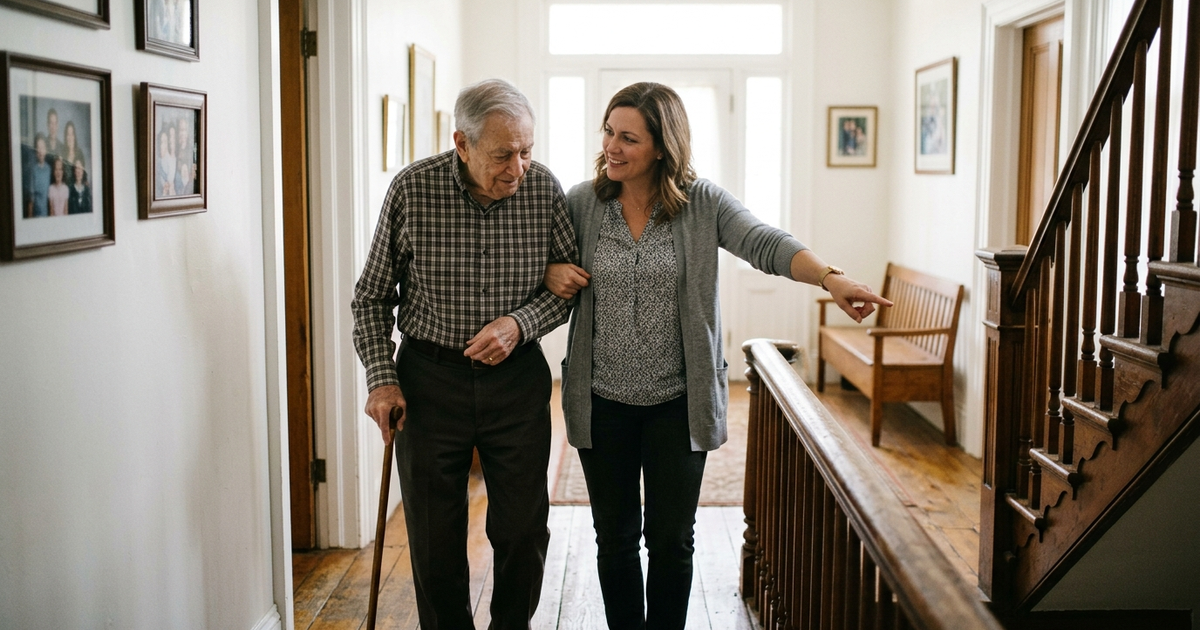
If your parent wants to stay in their own home — and most do — the home itself is either their biggest ally or their biggest risk. Falls are the leading cause of injury among older adults, and the majority happen at home in predictable places: bathrooms, stairs, and cluttered walkways. This home safety checklist for seniors walks room by room through the fixes that matter, organized from free changes to bigger investments.
A safety review is one of the first steps in our family guide to arranging in-home care for an aging parent — do it before hiring anyone, because the results shape how much help your parent actually needs.
Start with a walkthrough
Tour the home as if you've never seen it, ideally while your parent moves through their normal routine. Watch for what they grab, where they hesitate, and what they avoid. Struggling with steps, furniture-surfing for balance, or a pile-up of mail can be early signs your parent needs more help at home — not just a hazard list.
Whole-house basics (mostly free)
- Clear walkways of cords, clutter, and low furniture.
- Remove throw rugs or secure them with non-slip backing.
- Brighten lighting everywhere — swap in higher-lumen bulbs; dim hallways cause falls.
- Add night lights along the bed-to-bathroom route.
- Set the water heater to 120°F or below to prevent scalds.
- Check smoke and carbon monoxide detectors; put new batteries on a calendar.
- Post emergency numbers in large print near every phone, and program ICE contacts into their cell.
Bathroom: the highest-risk room
- Grab bars beside the toilet and inside and outside the shower — anchored into studs, never suction-mounted. This is the single highest-value modification in the house.
- Non-slip mats or adhesive strips in the tub and on the bathroom floor.
- Shower chair and handheld shower head so bathing can happen seated.
- Raised toilet seat or a comfort-height toilet if standing up is a struggle.
- Consider a walk-in shower conversion if stepping over a tub edge has become risky — a bigger project, but often the one that keeps someone home.
Kitchen
- Move everyday items to counter height — no step stools, no deep bending.
- Replace worn pot holders and check that burner knobs are clearly marked.
- Consider an auto shut-off device for the stove if forgetfulness is emerging.
- Ensure a sturdy chair or stool is available for resting during meal prep.
Bedroom
- Bed height should let feet rest flat on the floor when sitting on the edge.
- A lamp or switch reachable from bed, plus a phone or alert button at the bedside.
- A clear, lit path to the bathroom — this route causes a disproportionate share of nighttime falls.
Stairs and entrances
- Sturdy handrails on both sides of every staircase, indoors and out.
- High-contrast tape on step edges if vision is declining.
- Motion-sensor lighting at entrances and on stairways.
- A ramp or zero-step entry if a walker or wheelchair is in the picture.
- Stair lifts for multi-story homes where stairs have become the limiting factor — a significant purchase, but far cheaper than moving.
Technology worth considering
- Medical alert systems (wearable button or fall-detection pendant) — the classic, and still one of the most effective.
- Video doorbells to screen visitors and deter scams at the door.
- Motion or door sensors that let family confirm normal activity patterns — especially useful if you're managing your parent's care from another city. Talk with your parent first; monitoring should always be with their knowledge and consent.
Cost tiers: where to start
- Free to under $100: decluttering, rug removal, bulbs, night lights, water heater adjustment.
- $100–$500: grab bars, shower chair, raised toilet seat, handrail repairs, medical alert setup.
- $500–$5,000: walk-in shower conversion, ramps, widened doorways, better exterior lighting and paths.
- $5,000 and up: stair lifts, bathroom remodels, first-floor bedroom conversions.
Work top-down: the cheap tier prevents a large share of falls on its own. Some modifications may qualify for help through Medicaid waivers, VA programs, or local aging agencies — see our guide to paying for in-home care and related costs. The CDC's older adult fall prevention resources are a solid evidence-based reference.
Reassess every six months
A home that was safe in March may not be safe in October. Repeat the walkthrough twice a year and after any hospitalization, new diagnosis, or fall — even a "no big deal" one. If safety incidents keep happening despite good modifications and adequate help, that's important data; our guide on when in-home care isn't enough covers how to read it honestly.
The bottom line
Most home hazards are cheap to fix and take one weekend to address: clear the floors, light the pathways, anchor grab bars in the bathroom, and rail both sides of the stairs. Do the walkthrough this week, knock out the free tier immediately, and budget the bigger modifications based on what your parent's routine actually demands.
Related guides
- Arranging In-Home Care for an Aging Parent: A Family Guide
- Hospital Discharge Planning: Getting Your Parent Home Safely
- When In-Home Care Isn't Enough: Signs It's Time for the Next Step
- Creating a Written Care Plan the Whole Family Follows
- Managing an In-Home Caregiver From Another City
- How to Pay for In-Home Care: Medicare, Medicaid, VA Benefits, and LTC Insurance