Coordinating In-Home Care
10 Signs Your Aging Parent Needs Help at Home
Care Canary Editorial Team ·
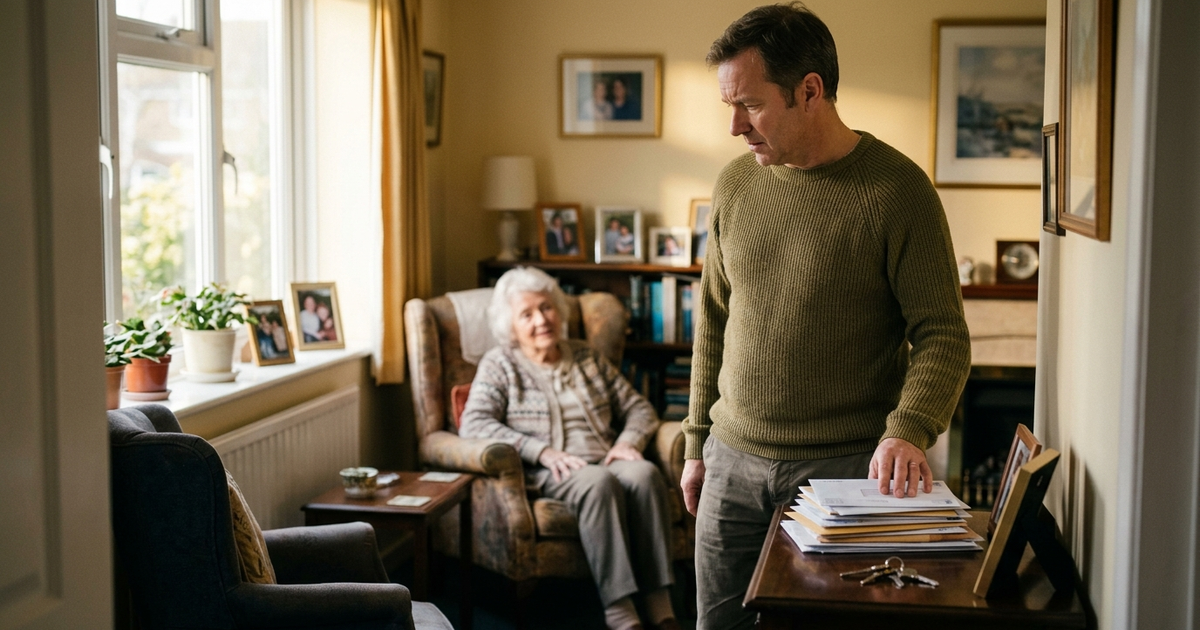
You visit your parent and something feels off — but they insist they're fine, and you can't point to one big thing. That's how it usually goes. The signs an elderly parent needs help rarely arrive as a single dramatic event. They accumulate quietly, and families who catch them early have far better options than families who wait for the fall.
Here are ten signs worth taking seriously, grouped by where you'll notice them. If several ring true, our family guide to arranging in-home care for an aging parent walks through what to do next, step by step.
Signs you'll see around the house
1. The mail is piling up. Unopened envelopes — especially bills — are one of the most reliable early flags. They can signal overwhelm, vision problems, or trouble managing money that used to be routine.
2. The fridge tells a story. Expired food, nearly empty shelves, or a freezer full of untouched meals suggests shopping or cooking has become too hard. Weight loss often follows before anyone connects the dots.
3. Housekeeping has slipped noticeably. Not a little clutter — a real change. Laundry piling up, dishes sitting for days, bathrooms going uncleaned in a home that was always kept up.
4. There are burn marks or small accidents. Scorched pots, a singed towel near the stove, dents in the car, scrapes on the garage door frame. Small accidents tend to escalate.
Signs you'll see in their health
5. Medications aren't being taken right. Full pill bottles that should be empty, empty ones that should be full, or confusion about what gets taken when. Medication mistakes are among the most dangerous problems on this list.
6. They're losing weight or looking unkempt. A parent who always dressed carefully now wearing the same clothes for days, skipping showers, or visibly thinner. Personal care is often the first thing to go when daily life gets overwhelming.
7. They've fallen — or almost fallen. One fall dramatically raises the odds of another. Bruises they explain away, furniture they grip while walking room to room, or a new fear of the stairs all count. A room-by-room home safety checklist can reduce the risk quickly, but recurring near-misses usually mean a person needs help, not just grab bars.
Signs you'll see in their behavior
8. They're withdrawing from things they loved. Skipping church, dropping the card game, letting friendships lapse. Isolation can be cause or effect — depression, hearing loss, and early cognitive change all show up this way.
9. They get lost or confused in familiar places. Missing the turn to a store they've driven to for decades, repeating questions in one conversation, missing appointments they never used to miss.
10. Their mood or personality has shifted. New irritability, suspicion, anxiety about leaving the house, or flat disinterest. Loved ones usually sense this change before they can name it.
One sign is a conversation. Several is a plan.
No single item on this list means your parent can't live independently. A messy kitchen after a bad month is a messy kitchen. What matters is pattern and trajectory: several signs at once, or one sign getting steadily worse.
A practical way to assess without hovering:
- Spend real time in the home — a weekend visit reveals what a phone call hides
- Ride along on a drive and an errand
- Look at the calendar and the checkbook if your parent will let you
- Compare notes with siblings and neighbors — each person sees a different slice
- Write down what you observe with dates — a simple log turns vague worry into a clear picture you can share with siblings or a doctor
How to bring it up without a fight
The conversation matters as much as the observation. Leading with "You can't live alone anymore" almost guarantees resistance. Leading with specifics and choices — "I noticed the pills from last month are still full. Can we figure out a system together?" — keeps your parent in the driver's seat.
Start small: help with cleaning or a few delivered meals is easier to accept than a caregiver. Our guide on talking to your parent about accepting help at home has scripts and autonomy-first framing for exactly this conversation.
Once your parent is open to it, capture what everyone agrees on in a simple written care plan — needs, routines, medications, and who's checking in when. It keeps siblings aligned and makes the next step, whatever it is, far easier.
When the signs point past home care
Sometimes the honest answer is that help at home won't be enough — repeated falls despite support, wandering, or needs that stretch around the clock. If you're seeing safety events rather than slipping housekeeping, read our guide on when in-home care isn't enough for the criteria families use to make that harder call.
The bottom line
Trust the pattern, not the reassurance. If you're seeing several of these signs, spend a weekend in the home, compare notes with your siblings, and start a specific, respectful conversation with your parent this month. Catching the need early means you choose the help — instead of a crisis choosing it for you.
Related guides
- Arranging In-Home Care for an Aging Parent: A Family Guide
- Hospital Discharge Planning: Getting Your Parent Home Safely
- When In-Home Care Isn't Enough: Signs It's Time for the Next Step
- Creating a Written Care Plan the Whole Family Follows
- Managing an In-Home Caregiver From Another City
- Home Safety Checklist: Modifications That Help Parents Age in Place